

2026.09.22-2026.09.23
-scaled.png)
Hosted by
Institute of Contemporary Art & Social Thoughts (ICAST),
School of Intermedia Art, China Academy of Art
Speaker
David Teh
Research Fellow
Koichiro Osaka
Moderator
Jiang Feiran
Date & Venue
2026-09-22, 14:00
Room 314, Building 18, School of Intermedia Art,
Xiangshan Campus, China Academy of Art
2026-09-23, 9:30 / 13:30
Room 321, Building 18, School of Intermedia Art,
Xiangshan Campus, China Academy of Art
Introduction
ICAST Reflects features David Teh—writer, curator, and Associate Professor at the National University of Singapore—as the keynote speaker, with Koichiro Osaka—curator, writer, and art history researcher—joining as research fellow. Drawing on David Teh's recent curatorial projects and theoretical research across Asia, he will examine the critical role of curatorial practice in the production of art history, approaching the topic through the lenses of the construction of the putatively "global" art historical canon, the historical trajectory of curatorial practice in China, and its geographical networks.
The two-day workshop comprises one public lecture and two thematic sessions:
9.22 Lecture
Loose Canons: Making Exhibitions Make Art History
What is the place of art history in curatorial work? This lecture considers the impact of curators, and art historical knowledge, in the value chain of contemporary art. In the last twenty years, the currency of art history has surged in Asia, but arguably, neither academic journals nor public institutional collections are its gold standard. Where else is art history made? Do our largest and most visible exhibitions - transnational surveys (including biennials) - play a part, and can they contribute to a more worldly and balanced history of art? Reflecting on recent curatorial projects in Istanbul, Gwangju and Phuket, Prof. David Teh will explore the dynamic interplay between exhibition and historicization in the recalibration of a putatively “global” canon.
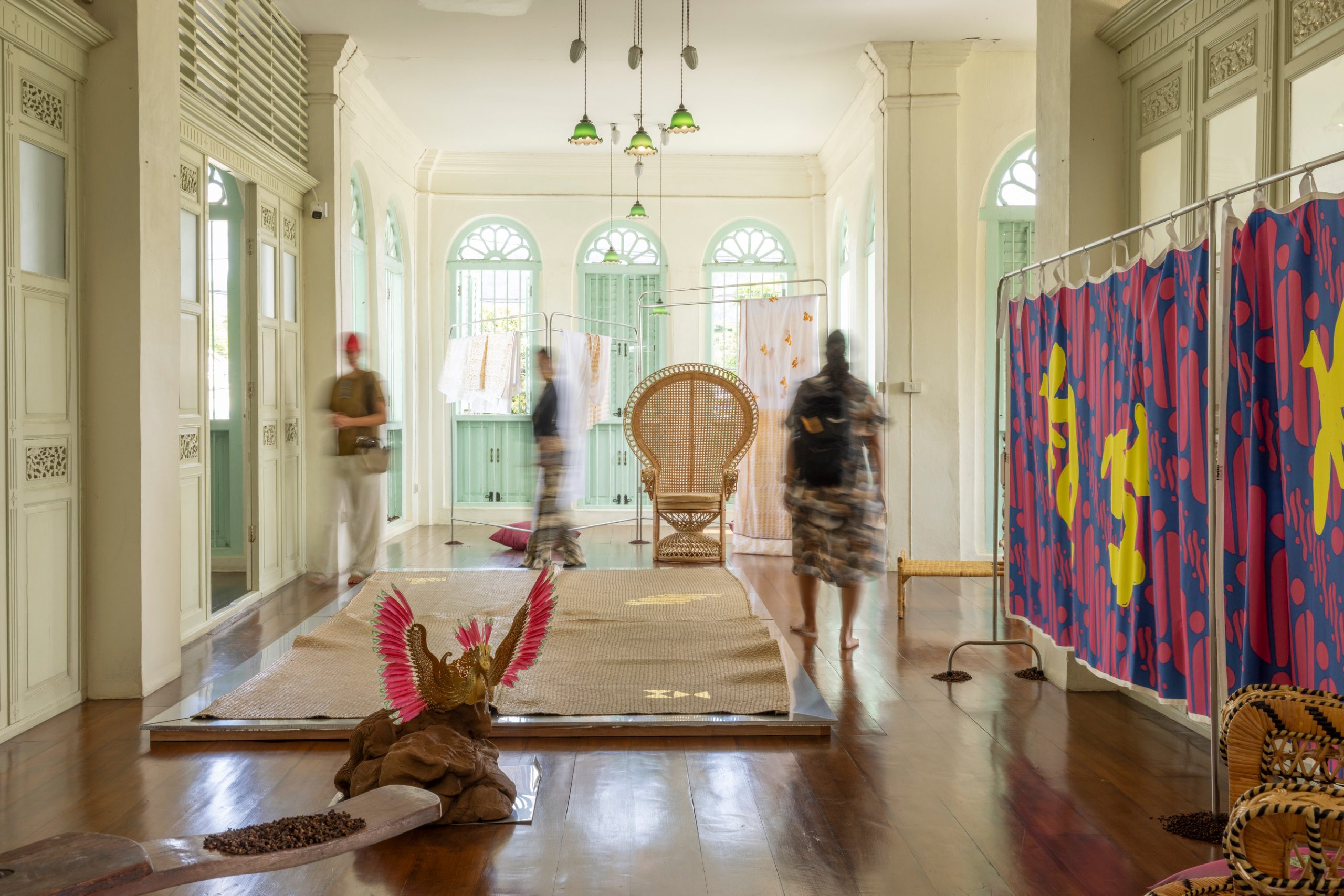
Nathalie Muchamad, The Throne and the Crown, 2025. Commissioned by Thailand Biennale, Phuket 2025 and Biennale Jogja, with support from Studio Plesungan, Indonesia.
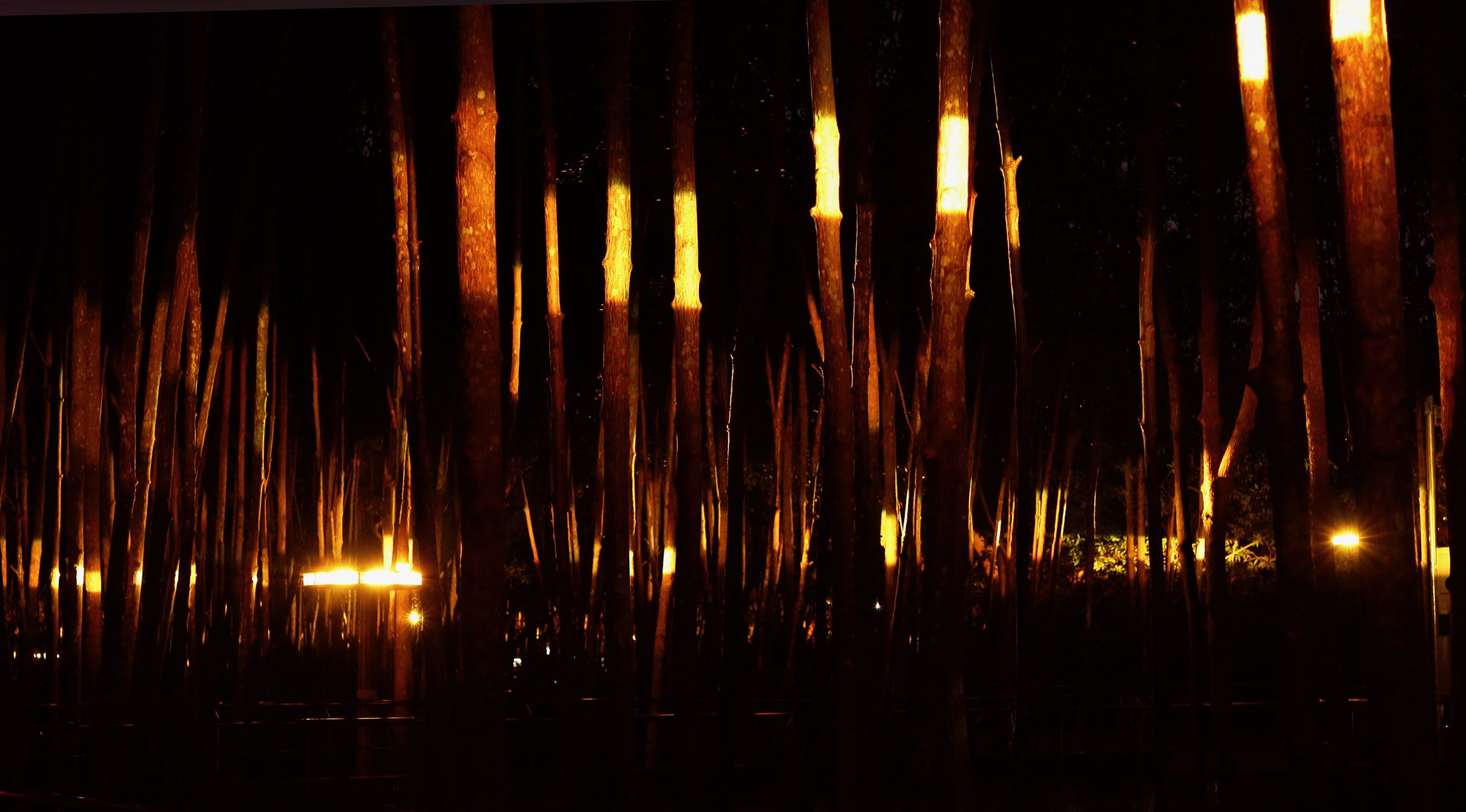
Eiji Sumi, Whisper of the Forest, 2025. Site-specific installation at Saphan Hin Mangrove Walkway, commissioned by Thailand Biennale, Phuket 2025 with support from National Center for Art Research, Japan.
9.23 Seminar
Session 1. Histories of the Curatorial Function in China
How has curatorial work taken shape historically in China? Commentary on the role of curators tends to revolve around the most mobile and visible ones, and a few of their landmark exhibitions. But as the domain of contemporary art has expanded and the curator has come to be recognised as a professional identity, more nuanced accounts have become necessary. How did the selection, exhibition and mediation of art come to be understood as curatorial, and how has the role changed since? This session explores the social, political and organisational conditions that have informed its development in China, and in a wider art world.
Session 2. Geographies of Curatorial Work: China, Asia and Transnational Networks
Curatorial practice in China - as in many places - has been a relay between national and more-than-national networks and expectations. It was shaped at once by curators' purchase on the state and ideas of national representation, and by participation in international exhibitions and conversations. This session considers the necessity and the limits of national framing. Where and when has the value of curatorial work only become intelligible through wider Asian or transnational connections. Is there such a thing as an “Asian” curatorial practice? And what could "regional" mean in the Chinese context?
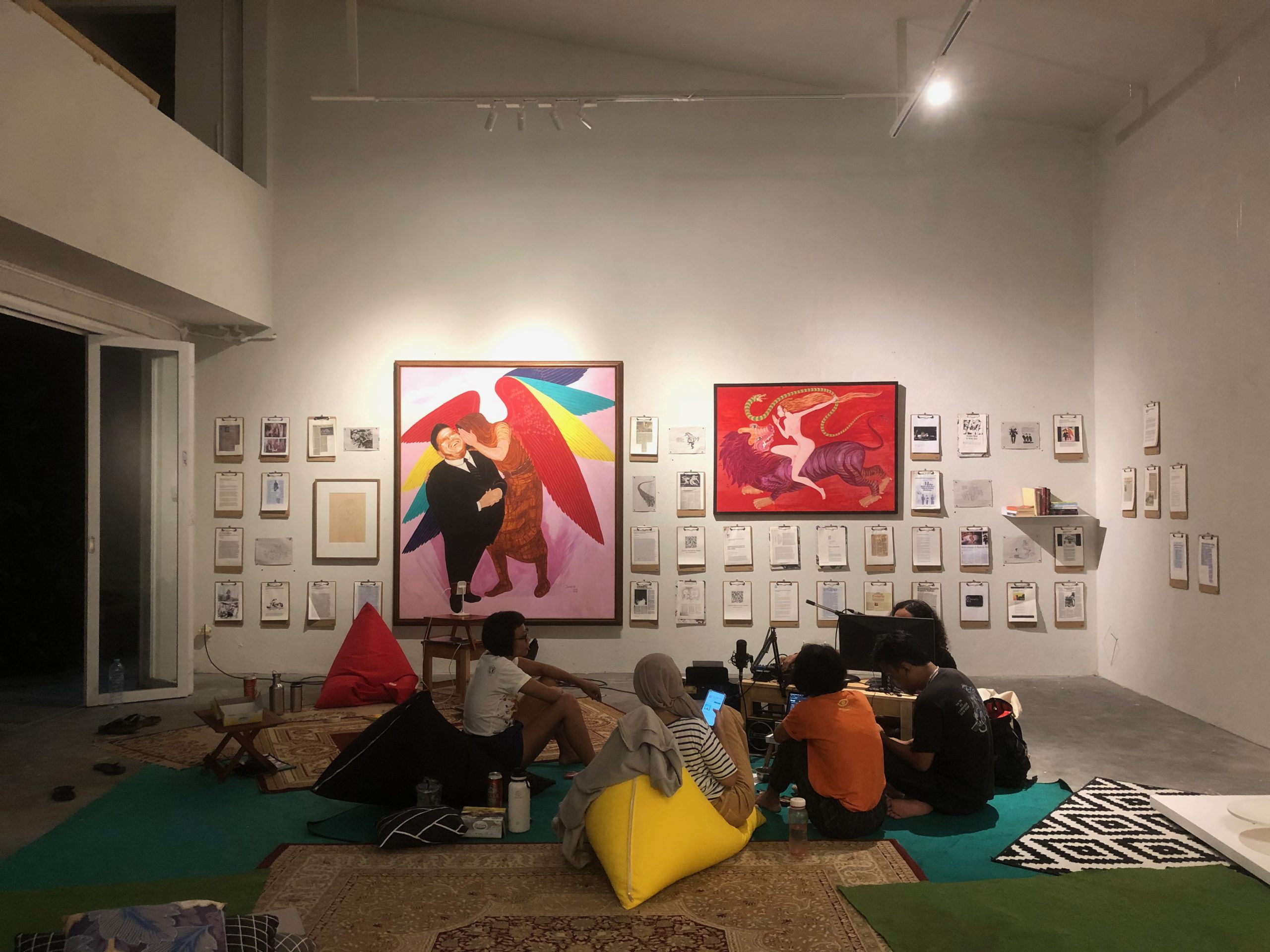
Danarto and Friends, Taman Bacaan Danarto [Danarto Reading Park], Jendela Institute, Yogyakarta, 2021.
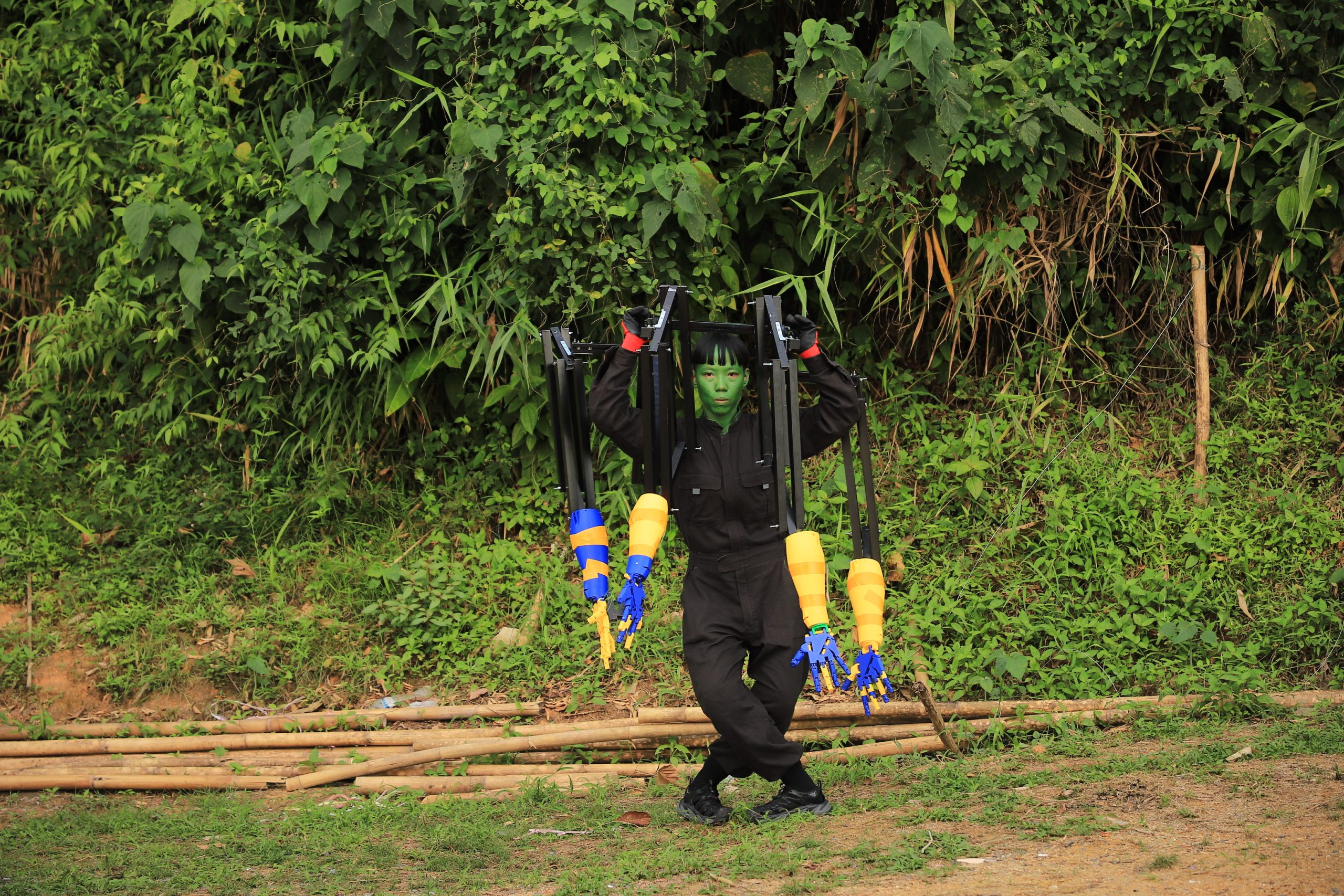
Wilawan Wiangthong, Titani, 2025. Production still from performance and installation commissioned by Thailand Biennale, Phuket 2025.
Speaker
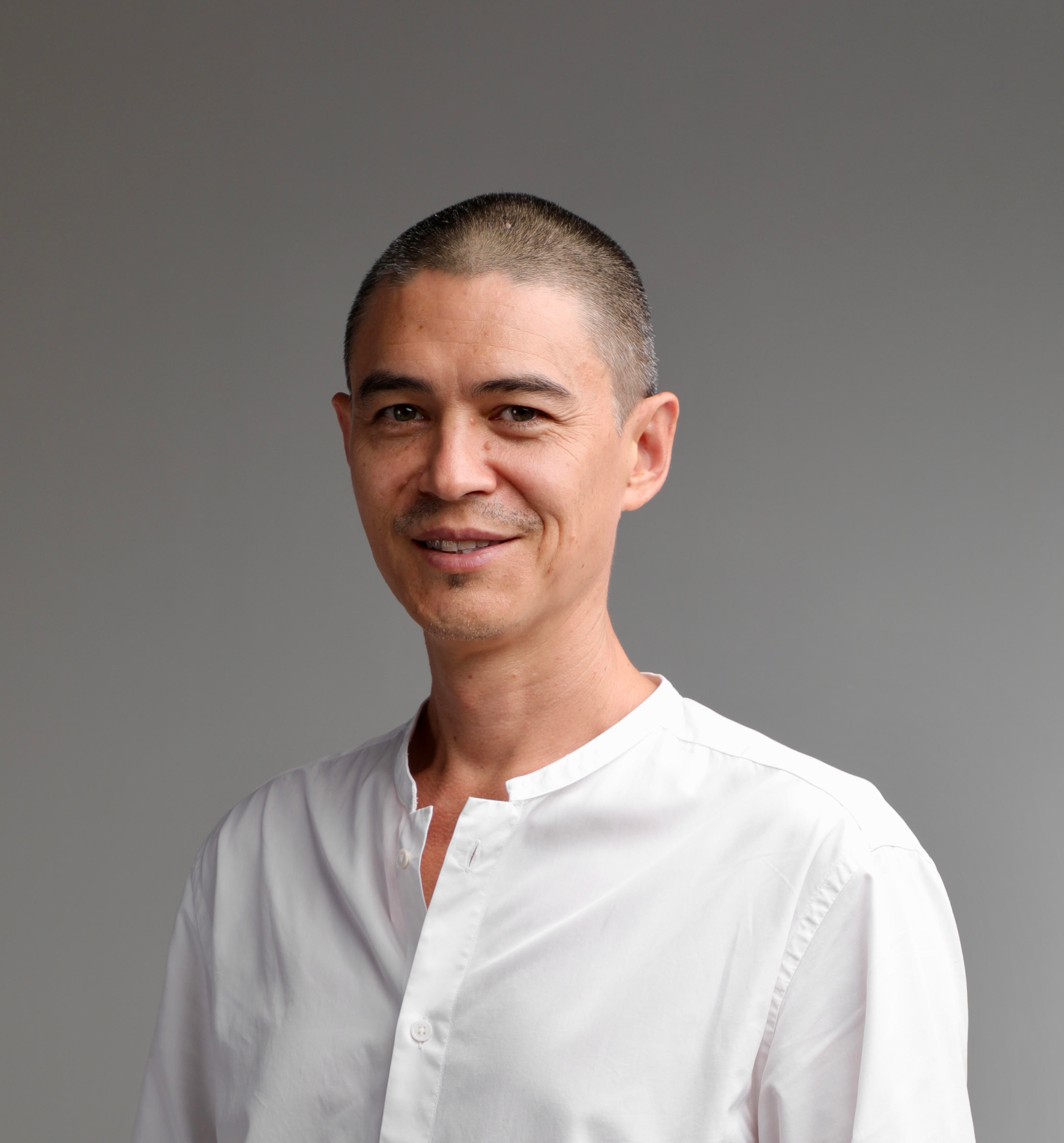
David Teh is a writer, curator and Associate Professor at the National University of Singapore, researching Southeast Asian modern and contemporary art. His curatorial projects have included Misfits: Pages from a Loose-leaf Modernity (HKW Berlin, 2017), Returns (12th Gwangju Biennale, 2018) and the 17th Istanbul Biennial (with Ute Meta Bauer and Amar Kanwar, 2022). Most recently, he served as Artistic Co-director of Thailand Biennale Phuket, 2025-26. David's publications have included Thai Art: Currencies of the Contemporary (MIT Press, 2017) and Artist-to-Artist: Independent Art Festivals in Chiang Mai 1992-98 (co-edited with David Morris; Afterall, 2018).
Research Fellow
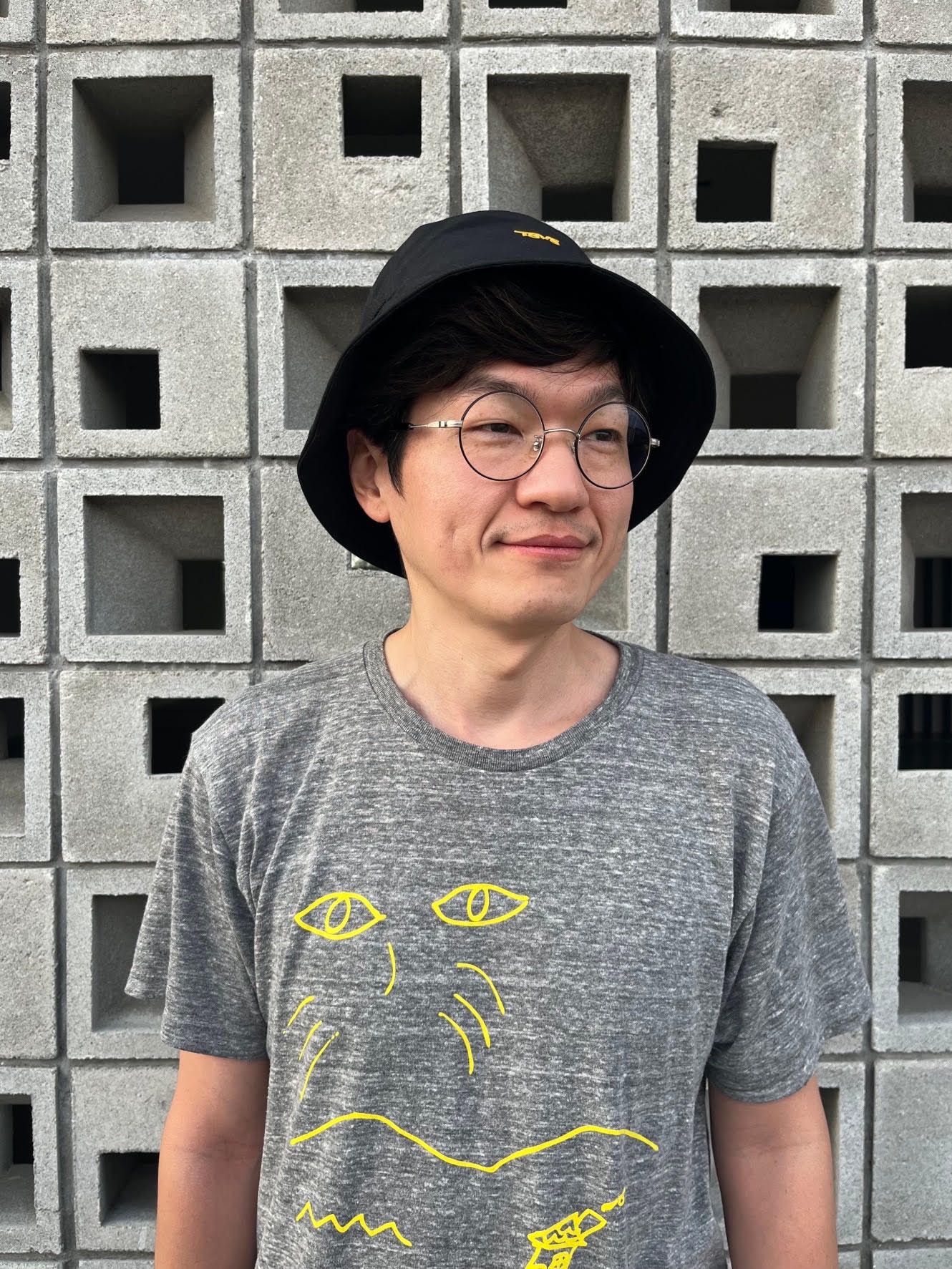
Koichiro Osaka is a curator, writer, and art history researcher. In 2015, he founded the independent exhibition space ASAKUSA in Tokyo. Over the past decade, he has curated site-oriented and politically reflexive projects, often with the support of municipal and public organisations. In 2023, he established the 0-eA Society for the Curatorial, a non-profit research initiative dedicated to fostering curatorial experimentation. Most recently, he organised the curatorial symposium YANARI in collaboration with the Seoul Museum of Art (Tokyo Photographic Art Museum, 2025). He is currently a PhD candidate in Comparative Asian Studies at the National University of Singapore.
Hosted by
Institute of Contemporary Art & Social Thoughts (ICAST),
School of Intermedia Art, China Academy of Art
Speaker
David Teh
Research Fellow
Koichiro Osaka
Moderator
Jiang Feiran
Date & Venue
2026-09-22, 14:00
Room 314, Building 18, School of Intermedia Art,
Xiangshan Campus, China Academy of Art
2026-09-23, 9:30 / 13:30
Room 321, Building 18, School of Intermedia Art,
Xiangshan Campus, China Academy of Art
Introduction
ICAST Reflects features David Teh—writer, curator, and Associate Professor at the National University of Singapore—as the keynote speaker, with Koichiro Osaka—curator, writer, and art history researcher—joining as research fellow. Drawing on David Teh's recent curatorial projects and theoretical research across Asia, he will examine the critical role of curatorial practice in the production of art history, approaching the topic through the lenses of the construction of the putatively "global" art historical canon, the historical trajectory of curatorial practice in China, and its geographical networks.
The two-day workshop comprises one public lecture and two thematic sessions:
9.22 Lecture
Loose Canons: Making Exhibitions Make Art History
What is the place of art history in curatorial work? This lecture considers the impact of curators, and art historical knowledge, in the value chain of contemporary art. In the last twenty years, the currency of art history has surged in Asia, but arguably, neither academic journals nor public institutional collections are its gold standard. Where else is art history made? Do our largest and most visible exhibitions - transnational surveys (including biennials) - play a part, and can they contribute to a more worldly and balanced history of art? Reflecting on recent curatorial projects in Istanbul, Gwangju and Phuket, Prof. David Teh will explore the dynamic interplay between exhibition and historicization in the recalibration of a putatively “global” canon.
Nathalie Muchamad, The Throne and the Crown, 2025. Commissioned by Thailand Biennale, Phuket 2025 and Biennale Jogja, with support from Studio Plesungan, Indonesia.
9.23 Seminar
Session 1. Histories of the Curatorial Function in China
How has curatorial work taken shape historically in China? Commentary on the role of curators tends to revolve around the most mobile and visible ones, and a few of their landmark exhibitions. But as the domain of contemporary art has expanded and the curator has come to be recognised as a professional identity, more nuanced accounts have become necessary. How did the selection, exhibition and mediation of art come to be understood as curatorial, and how has the role changed since? This session explores the social, political and organisational conditions that have informed its development in China, and in a wider art world.
Session 2. Geographies of Curatorial Work: China, Asia and Transnational Networks
Curatorial practice in China - as in many places - has been a relay between national and more-than-national networks and expectations. It was shaped at once by curators' purchase on the state and ideas of national representation, and by participation in international exhibitions and conversations. This session considers the necessity and the limits of national framing. Where and when has the value of curatorial work only become intelligible through wider Asian or transnational connections. Is there such a thing as an “Asian” curatorial practice? And what could "regional" mean in the Chinese context?
Wilawan Wiangthong, Titani, 2025. Production still from performance and installation commissioned by Thailand Biennale, Phuket 2025.
Speaker
David Teh is a writer, curator and Associate Professor at the National University of Singapore, researching Southeast Asian modern and contemporary art. His curatorial projects have included Misfits: Pages from a Loose-leaf Modernity (HKW Berlin, 2017), Returns (12th Gwangju Biennale, 2018) and the 17th Istanbul Biennial (with Ute Meta Bauer and Amar Kanwar, 2022). Most recently, he served as Artistic Co-director of Thailand Biennale Phuket, 2025-26. David's publications have included Thai Art: Currencies of the Contemporary (MIT Press, 2017) and Artist-to-Artist: Independent Art Festivals in Chiang Mai 1992-98 (co-edited with David Morris; Afterall, 2018).
Research Fellow
Koichiro Osaka is a curator, writer, and art history researcher. In 2015, he founded the independent exhibition space ASAKUSA in Tokyo. Over the past decade, he has curated site-oriented and politically reflexive projects, often with the support of municipal and public organisations. In 2023, he established the 0-eA Society for the Curatorial, a non-profit research initiative dedicated to fostering curatorial experimentation. Most recently, he organised the curatorial symposium YANARI in collaboration with the Seoul Museum of Art (Tokyo Photographic Art Museum, 2025). He is currently a PhD candidate in Comparative Asian Studies at the National University of Singapore.