

2026.06.01-2026.06.21
On Social Engineering
ICAST 2026 Graduation Exhibition
Supervisor:
Lu Jie, Johnson Chang, Pi Li
Advisor:
Liu Tian, Jiang Feiran, Tang Xiaolin
Master:
Jiang Huailiying, Zhang Chenlu, Wu Dan, Zhang Yijia, Jin Bowen
Venue:
Zhejiang Art Museum, 3rd Gallery
Duration:
2025.06.01-06.21 9:00-17:00
Host:
China Academy of Art, School of Intermedia Art
Institute of Contemporary Art and Social Thoughts (ICAST)
Co-host:
Zhejing Art Museum
In 2026, the Institute of Contemporary Art and Social Thoughts (ICAST) presents On Social Engineering, featuring curatorial proposals developed by five MA students of the graduating class of 2026, each grounded in distinct social and historical contexts:
1. A proposal for a "permanent exhibition hall" submitted to the government of Yanchuan County in Shaanxi Province. Using an archive of tens of thousands of paper-cut works as its foundation, it reconnects past artistic practices and methodologies—particularly those emerging from the Long March Project – the Great Survey of Paper-cutting in Yanchuan County—with local economic development, rural reconstruction, intangible cultural heritage, folk art, tourism, and cultural production, all through the medium of paper-cutting deeply rooted in the region itself;
2. A dérive through Yangjiang, a small coastal city in Guangdong Province. By transforming urban spaces into exhibition sites through wandering and investigation, the project traces layered local memories formed alongside rapid urbanization. It traverses the creative and everyday lives of several generations of "Yangjiang Youth," revealing rough, absurd, yet deeply humane experiences of life, improvisation, and playfulness—what Zheng Guogu once described as "life and fantasy";
3.An investigation beginning with photography, now a basic daily practice shared by nearly everyone. Structured through a three-stage exhibition design, the project examines three major media central to human perception: "space–image–text." It questions the dominant position of the image itself: in an era when AIGC can "generate the world" by "describing the world," and when images increasingly function as conditions for the production of reality, why does the production of images so often lead only to yet another image?
4. A reflection on modes of artistic production grounded in real working experience within a financial venture capital firm: by tracing a spectrum of artistic intervention—from critique and questioning, to ambiguous complicity, and finally to direct immersion within systems themselves—it explores how art might appropriate corporate structures and financial instruments, inserting itself into social infrastructures and the distribution of resources through alternative forms of institutional and systemic design. What it seeks is a form of "Artistic Building," for endless critique alone is no longer sufficient to respond to the realities of today.
5. Finally, it is a curatorial experiment departing from the methodology of divination: through the random selection and annotative interpretation of dozens of "speculative fictions poised to enter reality," it reflects on "creation" as a convergent process that eliminates possibilities rather than produces them. In turn, reverse divination is proposed as a disruptive mechanism capable of muddying the very drive toward creation itself—returning the "reality of the fictions" from a fixed outcome back into an infinite field of potentiality. The reinterpreted fictions thereby constitute the possibility of an "exhibition" which, at least in theory, ought to possess infinite possibilities.
...
Taken together, these projects constitute ICAST's preliminary attempt at what we call "social engineering" within the field of contemporary art and social thoughts.
This notion differs from the "social systems engineering" proposed by Qian Xuesen. It is neither an omniscient super-intelligence equipped with an all-seeing eye and a gigantic computational brain—though such fantasies continue to persist today in various domains, including the widely circulating imaginaries surrounding AGI—nor the detached theorizing or abstract discourse commonly associated with academic intellectual life—a tendency to which we ourselves are not entirely immune. Although rooted within the academy, it must confront "SOCIETY" itself: the messy and unstable terrain constituted by historical realities and living human beings.
Once one truly enters this terrain, the required methods inevitably exceed the ordinary conditions of both the individual artist and the academic researcher. We call this method "ENGINEERING." Engineering cannot remain at the level of elevated concepts alone; it demands implementation, construction, and realization. It requires a decisive departure from the still-dominant model of the isolated artist-artisan—the self-enclosed, small-scale mode of artistic self-production—as well as from the narcissistic closed circuits that romanticize marginality, underground status, or self-enclosed resistance. Instead, it must move toward a broader and far more troublesome social field—one filled with challenges, but equally alive with possibility.
At that point, theory and knowledge naturally begin to fail, or must be reactivated; after all, they were themselves historically written and invented into being. This is precisely what constitutes the "On" in On Social Engineering. In an era when disciplines and fields of knowledge become ever more fragmented and specialized, and when many of our humanistic and artistic concerns continue, often unconsciously, to follow Western-centered paradigms, what becomes necessary is to root ourselves in reality—the reality shared by all people. At such a moment, what is most urgently needed is not a ready-made methodology or preexisting body of knowledge, but courage and the resolve to move forward amid uncertainty.
Only when a proposition (mingti, 命题, where ming means "fate") becomes bound up with one's own fate can it become a real question; and vice versa.
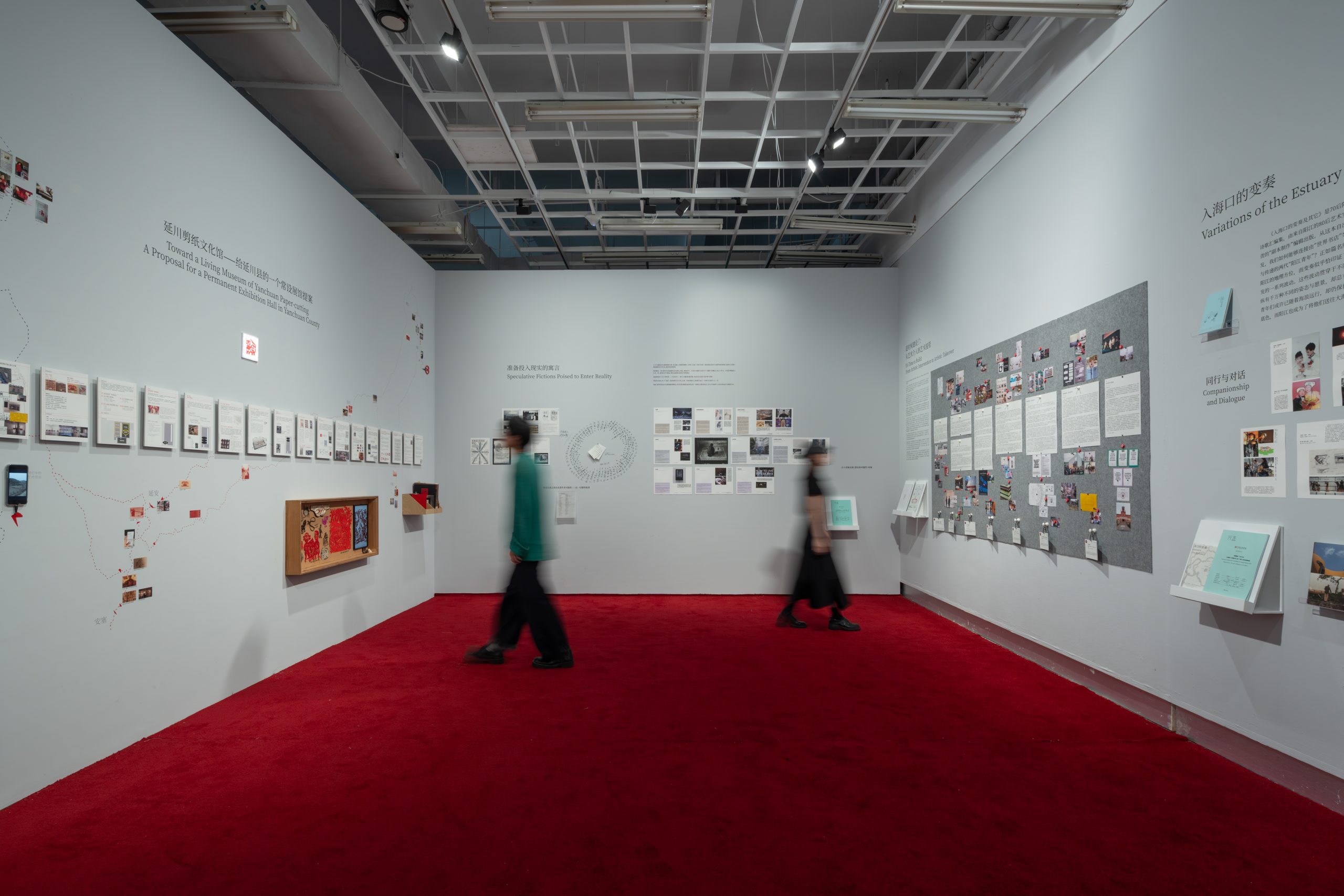
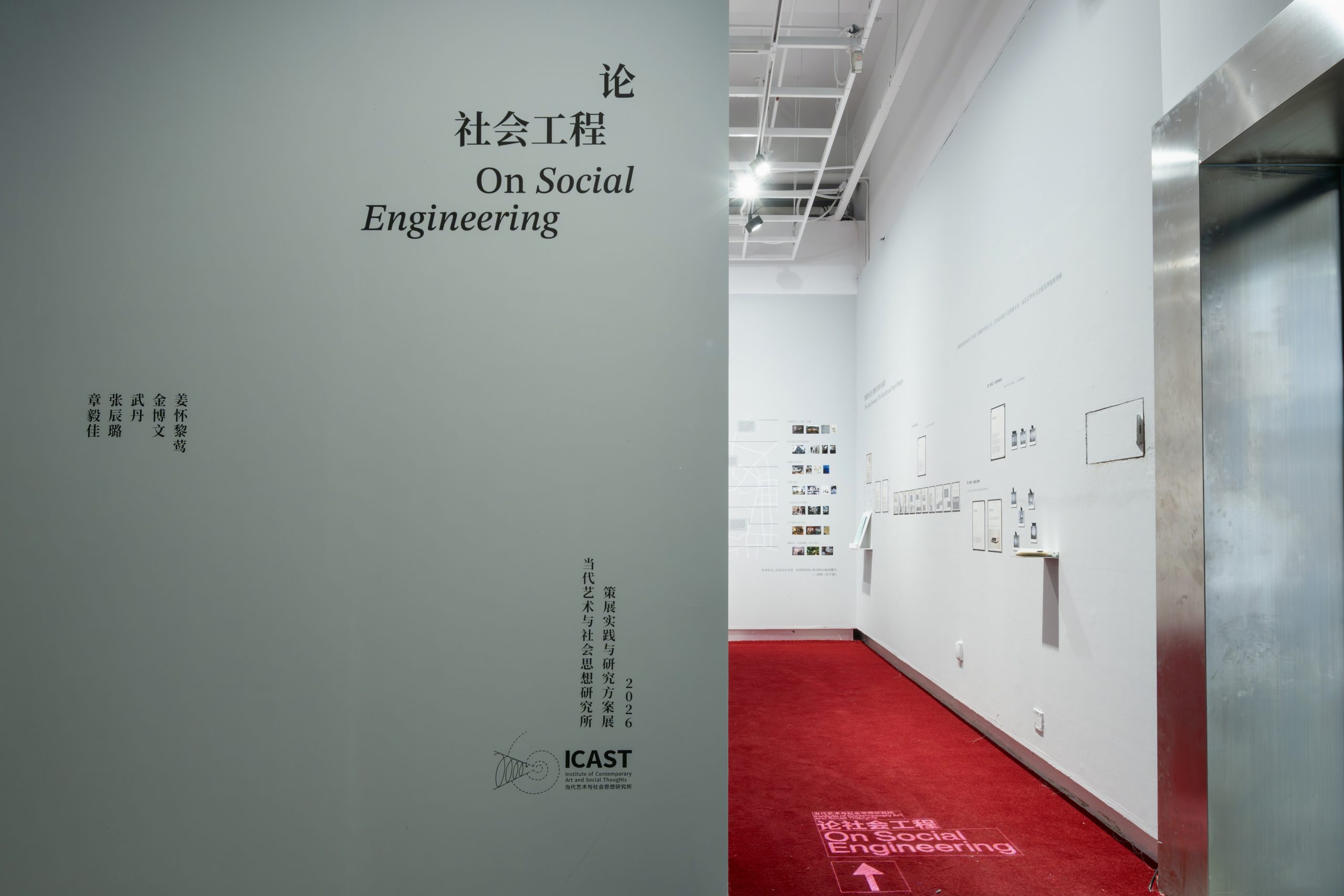
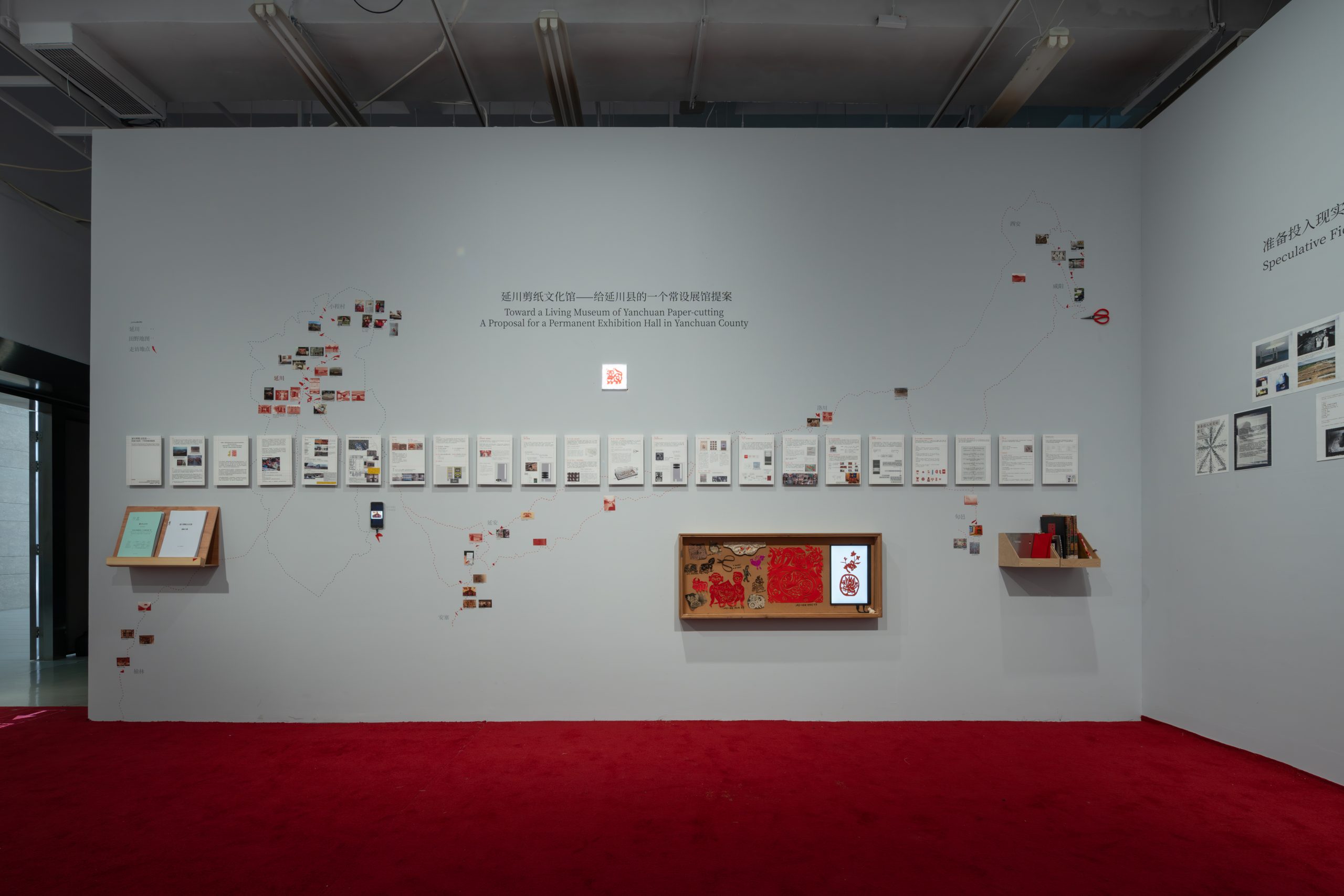
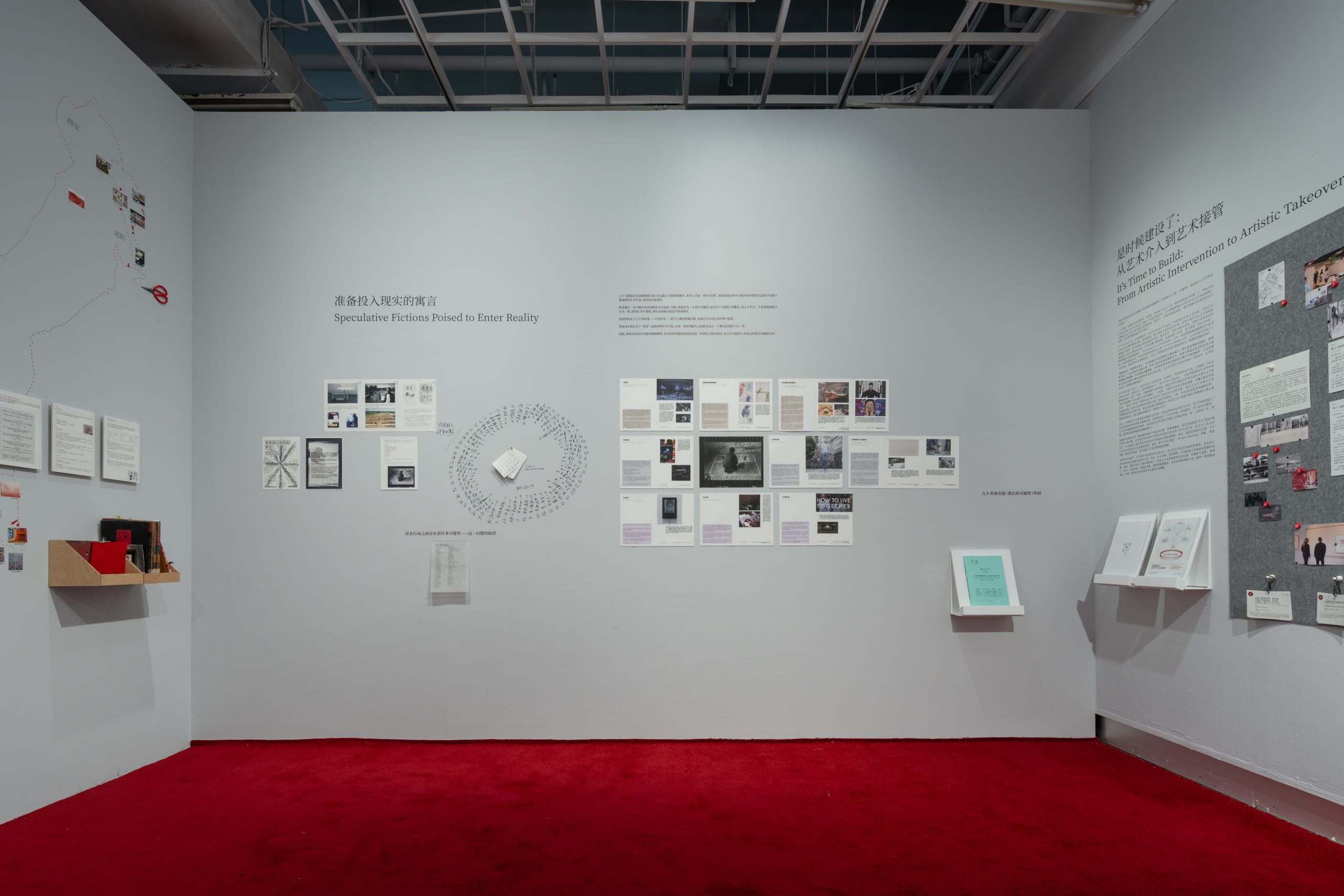
Exhibition View
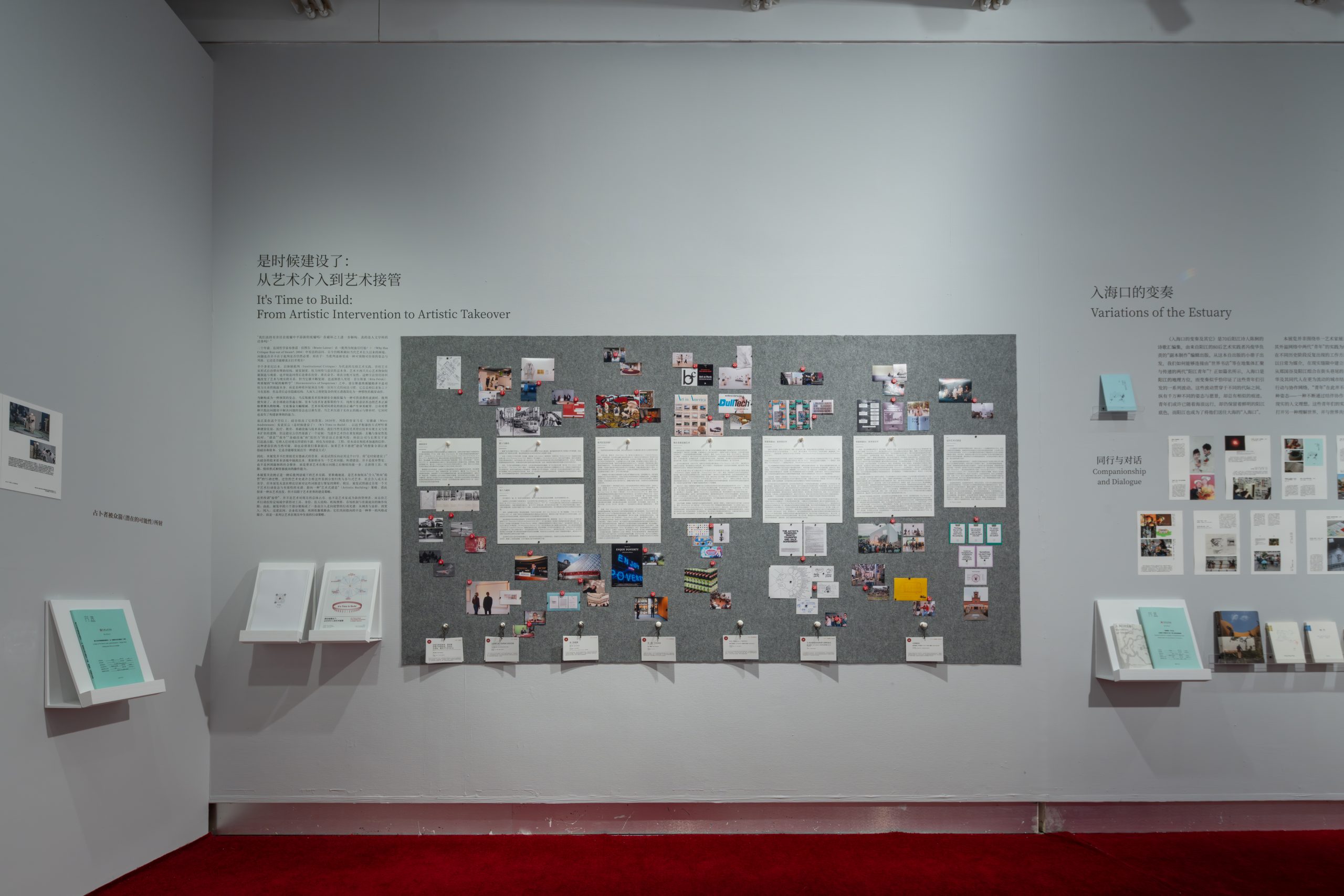
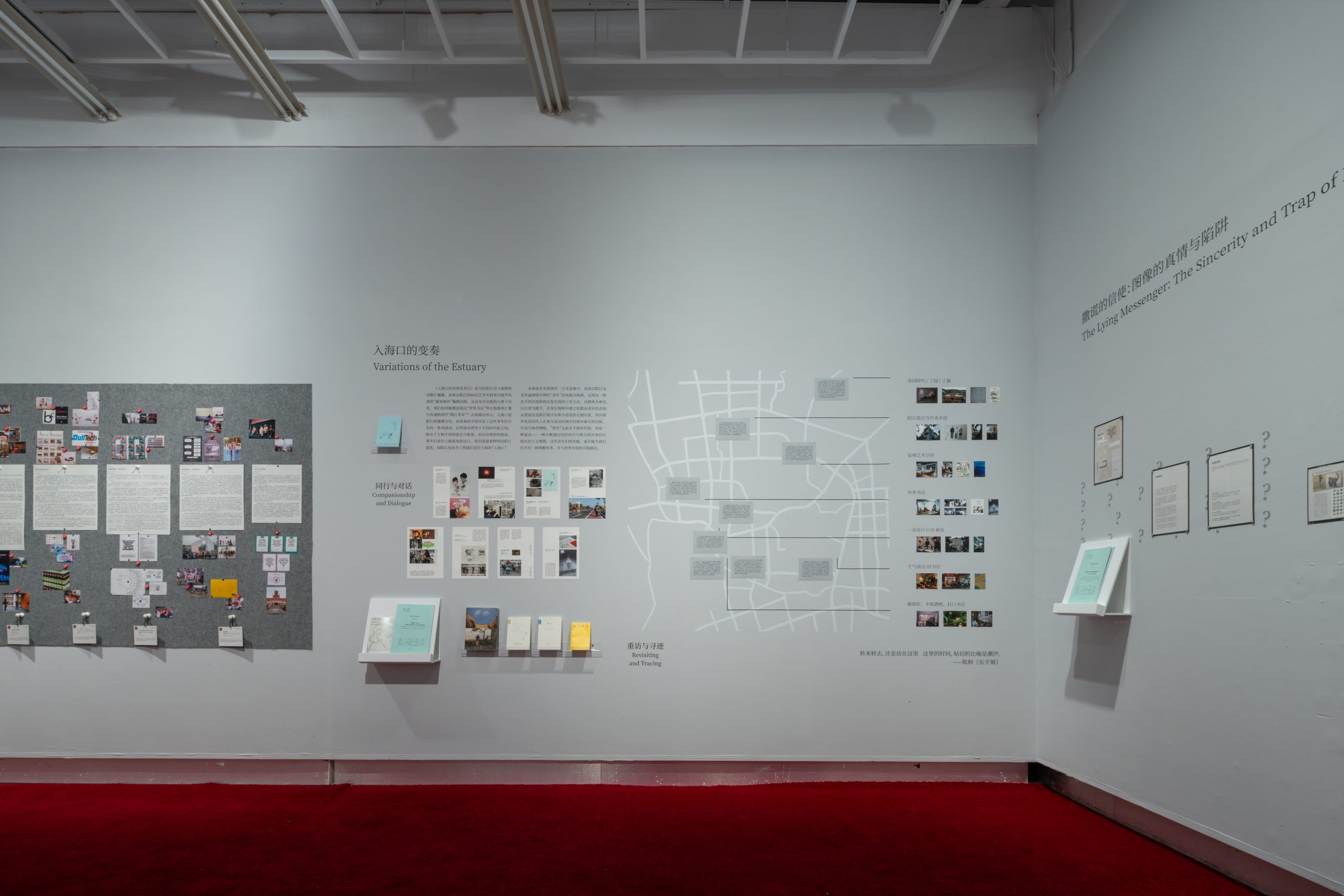
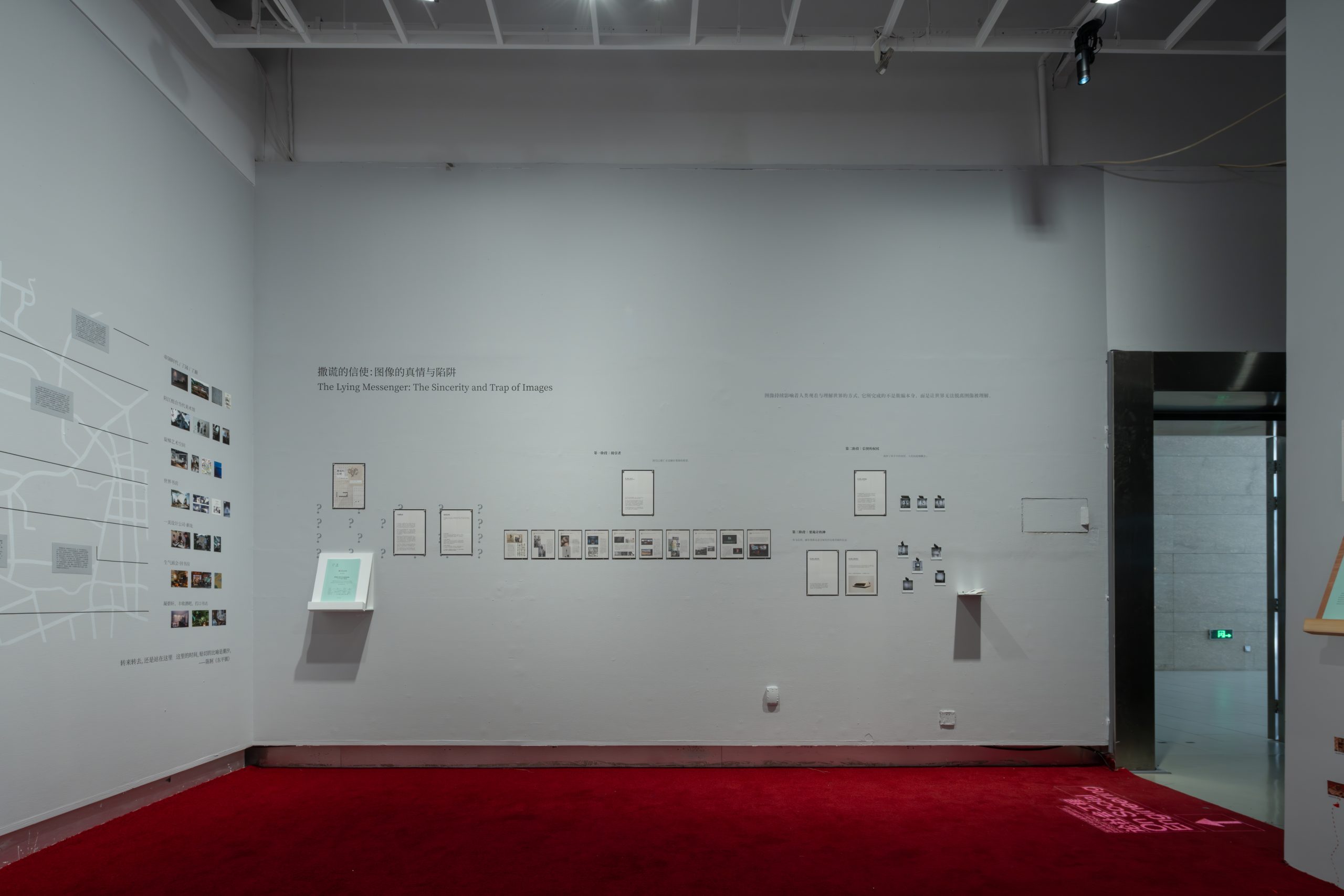
Graduation Works
Toward a Living Museum of Yanchuan Paper-cutting
A Proposal for a Permanent Exhibition Hall in Yanchuan County
Jiang Huailiying
Master
Research Direction: Contemporary Art and Curatorial Practice
This proposal envisions a permanent exhibition hall for Yanchuan County, Yan'an City, Shaanxi Province. Drawing upon long-term research and fieldwork, it anchors the accumulated experiences of contemporary art practice in the medium of paper-cutting—a cultural form deeply intertwined with the everyday life and life experiences of the people of Yanchuan. As one of the most representative regions for Chinese paper-cutting, Yanchuan occupies a crucial position for understanding the spiritual and cultural structure of northern China's agrarian civilization. For generations, local people have used paper-cutting to mark seasonal cycles and agricultural rhythms, express wishes for fertility and well-being, and adorn homes and rituals surrounding marriage, birth, and death. A pair of scissors accompanies the entire course of life—"from birth to death, from love to resentment": from cutting the umbilical cord at childbirth to crafting ritual paper offerings for funerary ceremonies. This practice embodies universal human concerns surrounding land, migration, emotion, inheritance, community, and artistic expression.
Beyond the rich material heritage of Yanchuan paper-cutting itself, another key foundation of this proposal is the archive generated through the Yanchuan Paper-cutting Census, a large-scale survey conducted between 2004 and 2009 by the contemporary art organization Long March Project in collaboration with the Yanchuan County Government. Covering the county's population of approximately 180,000 residents, the census ultimately established the world's largest county-level archive of paper-cutting, comprising 15,006 records that include paper-cut samples, field documentation, and villagers'oral testimonies. Using this archive as both source material and methodological thread, the proposed museum seeks to connect exhibition-making, research, and everyday life, linking rural development, folk art, education, cultural tourism, and local economic development, and exploring how folk artistic traditions may continue to nourish their places of origin and thrive in contemporary society.
The proposal adheres to a pragmatic principle of "no new buildings, activating existing resources," prioritizing the integration of Yanchuan's current public spaces to achieve maximum cultural and economic impact with minimal construction investment. This approach aligns with national policies on rural revitalization, living transmission of intangible cultural heritage, and the integration of culture and tourism, while responding directly to the county's current cultural needs. The museum is envisioned as an integrated platform comprising permanent exhibitions, a research archive, workshops and residency programs, digital platforms, and collaborative production units, forming an ongoing cultural generator that supports the creation, education, and circulation of Yanchuan paper-cutting. At its core, the museum focuses on the construction of working methods—through systematic mobilization, archival organization, visual presentation, and educational transformation—to establish a sustainable curatorial mechanism that enables Yanchuan to once again become a site of active cultural engagement.
The proposal is grounded in extensive fieldwork. The proposer traveled 1,300 kilometers by motorcycle, visiting over thirty museums, villages, and cultural sites related to paper-cutting across Shaanxi Province; discussed the museum project with the director and deputy director of the Yanchuan Bureau of Culture and Tourism, the head of the Intangible Cultural Heritage Center, and the director of the county Cultural Center; digitized 4,287 original census forms; and hosted the symposium "Long March Project Archive 1999—: One Hundred Days of Dialogue – Yanchuan Paper-cutting Workshop", bringing together key participants and researchers to reflect upon the contemporary foundations and future development of folk art.
The exhibition proposal presents the full trajectory of this work: historical context, field research, archival analysis, policy recommendations, academic dialogue, exhibition planning, and implementation strategies. Each element informs and supports the others, collectively forming a practical and actionable blueprint, while also representing a comprehensive research practice in which curatorial methodology itself functions as both tool and medium.
Master's Thesis:
Curatorial Action as Social Engineering: A Case Study of the Great Survey of Paper-cutting in Yanchuan County
Variations of the Estuary
Zhang Chenlu
Master
Research Direction: Contemporary Art and Curatorial Practice
"Yangjiang Youth" originally referred to a contemporary literary and artistic group active in Yangjiang, Guangdong, from the 1990s to the early 21st century. In the present context, however, it has come to signify a fluid, intergenerational spiritual figure: belonging both to those who grew up amid the region's intense social transformation, and to a younger generation of practitioners who continue to extend, rewrite, and respond to this legacy.
Variations of the Estuary and Others is a poetry anthology by Chen Ge, a Yangjiang poet of the post-1970s generation, published by Copy Production, an independent publishing initiative led by Feng Junhua, an artist from Yangjiang born in the 1980s. Starting from this self-published booklet, how might we connect two generations of "Yangjiang Youth" brought together and circulated through local initiatives such as World Bookstore? As the title suggests, the estuary marks Yangjiang's geographic position, while "variations" seem to echo the ripples generated by these practitioners. These ripples traverse different generations: despite diverse gestures and aspirations, they leave behind resonant traces of continuity. The youths may have already drifted away with the tide, yet they retain a distinct Yangjiang imprint, while Yangjiang itself becomes the "estuary" that sends them out toward the sea.
From the long-term street-based experiments of Zheng Guogu and the Yangjiang Group to the publishing, action, and collaborative networks developed by Feng Junhua and his contemporaries within more fluid urban structures, this exhibition traces the practices of two generations of "youth" within Yangjiang and its outward-reaching networks. It constructs a multilayered dialogue between works and works, media and media, allowing temporal depth and shifting perspectives to reflect one another through formal differences.
At the same time, Yangjiang's urban space is positioned as a site of unfolding: through wandering and exploration in this coastal city, the exhibition establishes connections between works, writing, and specific locations, weaving together local memories that evolve alongside urbanization and the creative and lived trajectories of practitioners across generations. Through these dispersed traces across the city, the exhibition seeks to outline a continuously emerging relational network, and to further reveal how different generations, within their respective historical conditions, transform experience and generate new possibilities for action.
Master's Thesis:
"Informal Construction" as Method: On Spatial Practices from Zheng Guogu's The Age of Empire to Liao Source
The Lying Messenger: The Sincerity and Trap of Images
Wu Dan
Master
Research Direction: Contemporary Art and Curatorial Practice
In ancient Greek mythology, Hermes served as the messenger between the divine and human realms, moving freely across the boundary that separated them. He delivered the will of the gods, yet also stole the secrets of mortals. As the gods themselves acknowledged, Hermes was a trickster—not a purely honest transmitter of information. Technical images, as the messengers of the modern age, inherit this same cunning nature: they communicate information that is simultaneously true and false. Through this cunning, images make history visible, while also leading it away from its original form.
In contemporary society, the transmission of information has become increasingly impure, always mediated by translation, interpretation, and misunderstanding. Images once pointed toward distant times and places, allowing people to witness what they had never physically encountered and preserving moments that had already disappeared. Today, however, images are no longer neutral messengers. In the very act of transmission, they select, reorganize, and even fabricate the content they claim to convey. With the emergence of artificial intelligence, image production has become further detached from direct bodily experience; a textual description alone can now generate an image.
Images intervene deeply in the ways humans perceive and understand the world, yet they also set a trap. Their achievement is not deception itself, but rather the creation of a condition in which the world can no longer be understood outside of images. Increasingly, the world itself comes into being for the sake of the image. In an age dominated by images, where are the relationships among image, history, and the event-site heading? As Vilém Flusser argued, technical images have become an irresistible productive mechanism of contemporary society: every action tends toward being recorded, circulated, and reproduced, gaining meaning through its dissemination. Under this logic, images cease to be mere representations of reality and gradually become one of the conditions through which reality itself is produced.
Within this context, if the production of images ultimately points only toward the creation of yet another image, to what extent do the "event-site" and "history" become forms of pre-scripted performance? If an event is no longer recorded by images, and if images cease to function as evidence, can history and the event-site still be said to exist?
This exhibition does not seek to answer these questions. Instead, by manipulating the mechanisms of exhibition-making, it places viewers within a process of continually losing their "evidence." Images, texts, and the exhibition site replace and contaminate one another, ultimately rendering the question of whether the exhibition ever took place into a proposition that can no longer be verified.
Master's Thesis:
Image Dissemination and the Construction of Origin Narratives in Chinese Contemporary Art: The Case of Three Art Groups in 1979
Speculative Fictions Poised to Enter Reality
Zhang Yijia
Master
Research Direction: Contemporary Art and Curatorial Practice
This exhibition turns to divination as a method of inquiry, asking how a logic of infinite variation and contingency might give rise to the stable structure of an exhibition as a concrete situation. Drawing on the yarrow stalks (shicao fa) described in the I Ching, nine hexagrams were generated through divination. Corresponding entries were then selected from the sixty-two propositions contained in Huang Yong Ping's Sans titre (1991–1992) and subjected to a process of annotated reinterpretation. These nine newly reread parables were subsequently paired with nine artworks, forming an exhibition (or, more precisely, one possible exhibition) organized according to a nine-square structure.
The project emerges from a suspicion toward divination itself: while casting signals toward the future, divination simultaneously narrows the range of possible paths. By reversing its logic, the exhibition seeks to unsettle faith in the oracle's power of world-making and to return instead to a space of inexhaustible possibility. In theory, therefore, this exhibition could exist in infinitely many versions.
Multiplicity does not imply a conservative refusal to choose, nor an idealized withdrawal from reality. Rather, it rests upon a commitment to keeping possibilities open.
As a paradoxical structure, divination can produce only conclusions that remain within the system that generates them; nothing lies beyond its predefined framework. Yet the diviner willingly approaches a result condensed into a single outcome and bears the burden of that result. Creation, in a broader sense, functions similarly. From an imagination of infinite extension, it selects only one possibility and treats it as the sole meaningful and present reality. Although divination and creation derive their authority from different agents, both proceed along a path of progressive reduction. In this sense, creation may be understood not as the production of possibilities but as their elimination. Just as divination elevates the oracle's pronouncement into a commandment, neither necessarily points toward a better future; instead, both risk diminishing the very desire to imagine futures otherwise.
At the heart of this inquiry lies the principle of change (yi). In the movement from the many to the one, the subtle transformations between yin and yang cannot be overlooked. Such transformations reveal latent vitality within danger, just as every apparent dead end contains an unnoticed opening. If outcomes can be continually reinterpreted, and if the outcome itself is as multiple and indeterminate as the process of random selection that produced it, then perhaps it becomes possible to lose oneself—and thereby become free—within the labyrinth of fate.
Master's Thesis:
A Study of Fei Dawei's early curatorial practice – Taking Chine Demain pour Hier as an example
It's Time to Build: From Artistic Intervention to Artistic Takeover
Jin Bowen
Master
Research Direction: Visual Culture and Curatorial Study
"Are we truly responsible for adding new ruins amid the ruins? Is it really the task of the humanities to further deconstruct on top of destruction?"
The question posed two decades ago by the French philosopher Bruno Latour in Why Has Critique Run out of Steam?(2004) still cuts with precision into a long-standing predicament of contemporary art. Perhaps the issue is not whether critique remains necessary, but rather this: when critique gradually becomes a predictable and imitable posture, even a style, can it still genuinely open up reality?
For more than half a century, avant-garde artistic practices represented by Institutional Critique have moved art away from formal autonomy and toward structures of patronage, exhibition systems, networks of power, and ideology itself. Art no longer concerns itself only with how art objects are made and viewed; it has also begun to ask who funds them, who names them, and who distributes visibility. This method once sharply transformed the relationship between art and reality. Yet as it has been repeatedly reproduced, it has also gradually slipped into what Rita Felski has questioned as the "hermeneutics of suspicion." What Felski challenges is not the exposure of power relations as such, but rather a reading habit that presupposes suspicion as the only mode of depth. It always believes that another truth lies beneath appearances, and that a hidden structure must exist behind every work. Over time, it reduces complex encounters with reality into an habitual act of unmasking.
When deconstruction becomes a preordained posture, and when rebellion is safely absorbed by the museum system as a consumable performance, critique loses its force. Today, as global politics broadly shifts to the right and capital and technology continue to concentrate at an accelerated pace, art grounded in a purely leftist ideological framework is facing an exhaustion at its source. Cultural funding has been drastically reduced; the art market has grown aesthetically fatigued with homogenized political correctness; and the public has become increasingly disappointed with a stance that only identifies problems without solving them. When art immerses itself in endless acts of revelation and repair, it simultaneously loses its capacity to construct something new.
It is precisely into this vacancy that Silicon Valley has offered its answer. In 2020, the venture capitalist Marc Andreessen published the manifesto "It's Time to Build," calling, in an almost bluntly forceful manner, for the reconstruction of housing, healthcare, education, infrastructure, and technological systems. We certainly do not need to accept the logic of techno-optimism and capital expansion behind it. Yet the manifesto nonetheless exposes a symptom: while progressive art continues to rehearse exposure, disenchantment, and symbolic resistance, the discourse of "building," "efficiency," "infrastructure," and "organizational capacity" is being rapidly occupied by venture capital, technology companies, and right-wing pragmatists. It transforms people's frustration with real-world stagnation into a faith in entrepreneurship, engineering, capital mobilization, and technological acceleration. This fervor for building is of course suspect, but it also compels us to ask the question anew: if art is unwilling to surrender the entire imagination of "building" to Silicon Valley and capital, can it develop another way of building?
This exhibition therefore does not seek to accept Andreessen's answer. Instead, it attempts to appropriate the slogan in reverse, extracting "It's Time to Build" from the techno-capitalist context of Silicon Valley and retranslating it as a question for art. Building, in this sense, does not mean abandoning vigilance, nor does it mean returning to a mild form of social repair. Rather, it requires art to take one step further after revealing a problem: to acquire the operational capacity to work with tools, permissions, organizational forms, and flows of resources.
What this exhibition attends to is a mode of artistic practice in a post-critical context; more precisely, it examines the process through which art moves from "intervention" toward "takeover." Art history may have classified such cases under participatory art, socially engaged art, or relational aesthetics. This exhibition, however, does not intend to engage in an elaborate theoretical parsing of these terms and their genealogies. Instead, by presenting a spectrum of artistic dispositions and forms of efficacy, it points toward a strategy of "Artistic Building," exploring a constructive strategy that begins from art but is not confined to the art world.
Here, "takeover" does not mean art's total possession of reality, nor does it mean that artists become new managers. Rather, it refers to the moment when artistic action gains operational access, within a specific field, to tools, identities, legal entities, institutional budgets, market mechanisms, and flows of resources. In this way, the six sections of the exhibition constitute an action spectrum moving from intervention toward takeover: from investigation and exposure, to insertion, intrusion, over-identification, corporate-form practice, and the rerouting of resources. Together, they point not to a single style or medium, but to a series of action strategies through which art can take effect within reality.
Master's Thesis:
Art as R&D: The Institutional Evolution of Media Art Labs and Research on Transdisciplinary Collaboration Mechanisms
Graphic Designer: C97
Videographer: Liu Yongge, Lan Shan, Mo Xi, Xie Ruichi
Promo Video Production: Xie Ruichi
Acknowledgement: Li Kaisheng, Xu Yuan, Min Han, Gao Shiqiang, Ma Yuanchi, Mei Yuezi, He Qinyu, Ben Qin Chuan, Ni Ziyi
On Social Engineering
ICAST 2026 Graduation Exhibition
Supervisor:
Lu Jie, Johnson Chang, Pi Li
Advisor:
Liu Tian, Jiang Feiran, Tang Xiaolin
Master:
Jiang Huailiying, Zhang Chenlu, Wu Dan, Zhang Yijia, Jin Bowen
Venue:
Zhejiang Art Museum, 3rd Gallery
Duration:
2025.06.01-06.21 9:00-17:00
Host:
China Academy of Art, School of Intermedia Art
Institute of Contemporary Art and Social Thoughts (ICAST)
Co-host:
Zhejing Art Museum
In 2026, the Institute of Contemporary Art and Social Thoughts (ICAST) presents On Social Engineering, featuring curatorial proposals developed by five MA students of the graduating class of 2026, each grounded in distinct social and historical contexts:
1. A proposal for a "permanent exhibition hall" submitted to the government of Yanchuan County in Shaanxi Province. Using an archive of tens of thousands of paper-cut works as its foundation, it reconnects past artistic practices and methodologies—particularly those emerging from the Long March Project – the Great Survey of Paper-cutting in Yanchuan County—with local economic development, rural reconstruction, intangible cultural heritage, folk art, tourism, and cultural production, all through the medium of paper-cutting deeply rooted in the region itself;
2. A dérive through Yangjiang, a small coastal city in Guangdong Province. By transforming urban spaces into exhibition sites through wandering and investigation, the project traces layered local memories formed alongside rapid urbanization. It traverses the creative and everyday lives of several generations of "Yangjiang Youth," revealing rough, absurd, yet deeply humane experiences of life, improvisation, and playfulness—what Zheng Guogu once described as "life and fantasy";
3.An investigation beginning with photography, now a basic daily practice shared by nearly everyone. Structured through a three-stage exhibition design, the project examines three major media central to human perception: "space–image–text." It questions the dominant position of the image itself: in an era when AIGC can "generate the world" by "describing the world," and when images increasingly function as conditions for the production of reality, why does the production of images so often lead only to yet another image?
4. A reflection on modes of artistic production grounded in real working experience within a financial venture capital firm: by tracing a spectrum of artistic intervention—from critique and questioning, to ambiguous complicity, and finally to direct immersion within systems themselves—it explores how art might appropriate corporate structures and financial instruments, inserting itself into social infrastructures and the distribution of resources through alternative forms of institutional and systemic design. What it seeks is a form of "Artistic Building," for endless critique alone is no longer sufficient to respond to the realities of today.
5. Finally, it is a curatorial experiment departing from the methodology of divination: through the random selection and annotative interpretation of dozens of "speculative fictions poised to enter reality," it reflects on "creation" as a convergent process that eliminates possibilities rather than produces them. In turn, reverse divination is proposed as a disruptive mechanism capable of muddying the very drive toward creation itself—returning the "reality of the fictions" from a fixed outcome back into an infinite field of potentiality. The reinterpreted fictions thereby constitute the possibility of an "exhibition" which, at least in theory, ought to possess infinite possibilities.
...
Taken together, these projects constitute ICAST's preliminary attempt at what we call "social engineering" within the field of contemporary art and social thoughts.
This notion differs from the "social systems engineering" proposed by Qian Xuesen. It is neither an omniscient super-intelligence equipped with an all-seeing eye and a gigantic computational brain—though such fantasies continue to persist today in various domains, including the widely circulating imaginaries surrounding AGI—nor the detached theorizing or abstract discourse commonly associated with academic intellectual life—a tendency to which we ourselves are not entirely immune. Although rooted within the academy, it must confront "SOCIETY" itself: the messy and unstable terrain constituted by historical realities and living human beings.
Once one truly enters this terrain, the required methods inevitably exceed the ordinary conditions of both the individual artist and the academic researcher. We call this method "ENGINEERING." Engineering cannot remain at the level of elevated concepts alone; it demands implementation, construction, and realization. It requires a decisive departure from the still-dominant model of the isolated artist-artisan—the self-enclosed, small-scale mode of artistic self-production—as well as from the narcissistic closed circuits that romanticize marginality, underground status, or self-enclosed resistance. Instead, it must move toward a broader and far more troublesome social field—one filled with challenges, but equally alive with possibility.
At that point, theory and knowledge naturally begin to fail, or must be reactivated; after all, they were themselves historically written and invented into being. This is precisely what constitutes the "On" in On Social Engineering. In an era when disciplines and fields of knowledge become ever more fragmented and specialized, and when many of our humanistic and artistic concerns continue, often unconsciously, to follow Western-centered paradigms, what becomes necessary is to root ourselves in reality—the reality shared by all people. At such a moment, what is most urgently needed is not a ready-made methodology or preexisting body of knowledge, but courage and the resolve to move forward amid uncertainty.
Only when a proposition (mingti, 命题, where ming means "fate") becomes bound up with one's own fate can it become a real question; and vice versa.
Exhibition View
Graduation Works
Toward a Living Museum of Yanchuan Paper-cutting
A Proposal for a Permanent Exhibition Hall in Yanchuan County
Jiang Huailiying
Master
Research Direction: Contemporary Art and Curatorial Practice
This proposal envisions a permanent exhibition hall for Yanchuan County, Yan'an City, Shaanxi Province. Drawing upon long-term research and fieldwork, it anchors the accumulated experiences of contemporary art practice in the medium of paper-cutting—a cultural form deeply intertwined with the everyday life and life experiences of the people of Yanchuan. As one of the most representative regions for Chinese paper-cutting, Yanchuan occupies a crucial position for understanding the spiritual and cultural structure of northern China's agrarian civilization. For generations, local people have used paper-cutting to mark seasonal cycles and agricultural rhythms, express wishes for fertility and well-being, and adorn homes and rituals surrounding marriage, birth, and death. A pair of scissors accompanies the entire course of life—"from birth to death, from love to resentment": from cutting the umbilical cord at childbirth to crafting ritual paper offerings for funerary ceremonies. This practice embodies universal human concerns surrounding land, migration, emotion, inheritance, community, and artistic expression.
Beyond the rich material heritage of Yanchuan paper-cutting itself, another key foundation of this proposal is the archive generated through the Yanchuan Paper-cutting Census, a large-scale survey conducted between 2004 and 2009 by the contemporary art organization Long March Project in collaboration with the Yanchuan County Government. Covering the county's population of approximately 180,000 residents, the census ultimately established the world's largest county-level archive of paper-cutting, comprising 15,006 records that include paper-cut samples, field documentation, and villagers'oral testimonies. Using this archive as both source material and methodological thread, the proposed museum seeks to connect exhibition-making, research, and everyday life, linking rural development, folk art, education, cultural tourism, and local economic development, and exploring how folk artistic traditions may continue to nourish their places of origin and thrive in contemporary society.
The proposal adheres to a pragmatic principle of "no new buildings, activating existing resources," prioritizing the integration of Yanchuan's current public spaces to achieve maximum cultural and economic impact with minimal construction investment. This approach aligns with national policies on rural revitalization, living transmission of intangible cultural heritage, and the integration of culture and tourism, while responding directly to the county's current cultural needs. The museum is envisioned as an integrated platform comprising permanent exhibitions, a research archive, workshops and residency programs, digital platforms, and collaborative production units, forming an ongoing cultural generator that supports the creation, education, and circulation of Yanchuan paper-cutting. At its core, the museum focuses on the construction of working methods—through systematic mobilization, archival organization, visual presentation, and educational transformation—to establish a sustainable curatorial mechanism that enables Yanchuan to once again become a site of active cultural engagement.
The proposal is grounded in extensive fieldwork. The proposer traveled 1,300 kilometers by motorcycle, visiting over thirty museums, villages, and cultural sites related to paper-cutting across Shaanxi Province; discussed the museum project with the director and deputy director of the Yanchuan Bureau of Culture and Tourism, the head of the Intangible Cultural Heritage Center, and the director of the county Cultural Center; digitized 4,287 original census forms; and hosted the symposium "Long March Project Archive 1999—: One Hundred Days of Dialogue – Yanchuan Paper-cutting Workshop", bringing together key participants and researchers to reflect upon the contemporary foundations and future development of folk art.
The exhibition proposal presents the full trajectory of this work: historical context, field research, archival analysis, policy recommendations, academic dialogue, exhibition planning, and implementation strategies. Each element informs and supports the others, collectively forming a practical and actionable blueprint, while also representing a comprehensive research practice in which curatorial methodology itself functions as both tool and medium.
Master's Thesis:
Curatorial Action as Social Engineering: A Case Study of the Great Survey of Paper-cutting in Yanchuan County
Variations of the Estuary
Zhang Chenlu
Master
Research Direction: Contemporary Art and Curatorial Practice
"Yangjiang Youth" originally referred to a contemporary literary and artistic group active in Yangjiang, Guangdong, from the 1990s to the early 21st century. In the present context, however, it has come to signify a fluid, intergenerational spiritual figure: belonging both to those who grew up amid the region's intense social transformation, and to a younger generation of practitioners who continue to extend, rewrite, and respond to this legacy.
Variations of the Estuary and Others is a poetry anthology by Chen Ge, a Yangjiang poet of the post-1970s generation, published by Copy Production, an independent publishing initiative led by Feng Junhua, an artist from Yangjiang born in the 1980s. Starting from this self-published booklet, how might we connect two generations of "Yangjiang Youth" brought together and circulated through local initiatives such as World Bookstore? As the title suggests, the estuary marks Yangjiang's geographic position, while "variations" seem to echo the ripples generated by these practitioners. These ripples traverse different generations: despite diverse gestures and aspirations, they leave behind resonant traces of continuity. The youths may have already drifted away with the tide, yet they retain a distinct Yangjiang imprint, while Yangjiang itself becomes the "estuary" that sends them out toward the sea.
From the long-term street-based experiments of Zheng Guogu and the Yangjiang Group to the publishing, action, and collaborative networks developed by Feng Junhua and his contemporaries within more fluid urban structures, this exhibition traces the practices of two generations of "youth" within Yangjiang and its outward-reaching networks. It constructs a multilayered dialogue between works and works, media and media, allowing temporal depth and shifting perspectives to reflect one another through formal differences.
At the same time, Yangjiang's urban space is positioned as a site of unfolding: through wandering and exploration in this coastal city, the exhibition establishes connections between works, writing, and specific locations, weaving together local memories that evolve alongside urbanization and the creative and lived trajectories of practitioners across generations. Through these dispersed traces across the city, the exhibition seeks to outline a continuously emerging relational network, and to further reveal how different generations, within their respective historical conditions, transform experience and generate new possibilities for action.
Master's Thesis:
"Informal Construction" as Method: On Spatial Practices from Zheng Guogu's The Age of Empire to Liao Source
The Lying Messenger: The Sincerity and Trap of Images
Wu Dan
Master
Research Direction: Contemporary Art and Curatorial Practice
In ancient Greek mythology, Hermes served as the messenger between the divine and human realms, moving freely across the boundary that separated them. He delivered the will of the gods, yet also stole the secrets of mortals. As the gods themselves acknowledged, Hermes was a trickster—not a purely honest transmitter of information. Technical images, as the messengers of the modern age, inherit this same cunning nature: they communicate information that is simultaneously true and false. Through this cunning, images make history visible, while also leading it away from its original form.
In contemporary society, the transmission of information has become increasingly impure, always mediated by translation, interpretation, and misunderstanding. Images once pointed toward distant times and places, allowing people to witness what they had never physically encountered and preserving moments that had already disappeared. Today, however, images are no longer neutral messengers. In the very act of transmission, they select, reorganize, and even fabricate the content they claim to convey. With the emergence of artificial intelligence, image production has become further detached from direct bodily experience; a textual description alone can now generate an image.
Images intervene deeply in the ways humans perceive and understand the world, yet they also set a trap. Their achievement is not deception itself, but rather the creation of a condition in which the world can no longer be understood outside of images. Increasingly, the world itself comes into being for the sake of the image. In an age dominated by images, where are the relationships among image, history, and the event-site heading? As Vilém Flusser argued, technical images have become an irresistible productive mechanism of contemporary society: every action tends toward being recorded, circulated, and reproduced, gaining meaning through its dissemination. Under this logic, images cease to be mere representations of reality and gradually become one of the conditions through which reality itself is produced.
Within this context, if the production of images ultimately points only toward the creation of yet another image, to what extent do the "event-site" and "history" become forms of pre-scripted performance? If an event is no longer recorded by images, and if images cease to function as evidence, can history and the event-site still be said to exist?
This exhibition does not seek to answer these questions. Instead, by manipulating the mechanisms of exhibition-making, it places viewers within a process of continually losing their "evidence." Images, texts, and the exhibition site replace and contaminate one another, ultimately rendering the question of whether the exhibition ever took place into a proposition that can no longer be verified.
Master's Thesis:
Image Dissemination and the Construction of Origin Narratives in Chinese Contemporary Art: The Case of Three Art Groups in 1979
Speculative Fictions Poised to Enter Reality
Zhang Yijia
Master
Research Direction: Contemporary Art and Curatorial Practice
This exhibition turns to divination as a method of inquiry, asking how a logic of infinite variation and contingency might give rise to the stable structure of an exhibition as a concrete situation. Drawing on the yarrow stalks (shicao fa) described in the I Ching, nine hexagrams were generated through divination. Corresponding entries were then selected from the sixty-two propositions contained in Huang Yong Ping's Sans titre (1991–1992) and subjected to a process of annotated reinterpretation. These nine newly reread parables were subsequently paired with nine artworks, forming an exhibition (or, more precisely, one possible exhibition) organized according to a nine-square structure.
The project emerges from a suspicion toward divination itself: while casting signals toward the future, divination simultaneously narrows the range of possible paths. By reversing its logic, the exhibition seeks to unsettle faith in the oracle's power of world-making and to return instead to a space of inexhaustible possibility. In theory, therefore, this exhibition could exist in infinitely many versions.
Multiplicity does not imply a conservative refusal to choose, nor an idealized withdrawal from reality. Rather, it rests upon a commitment to keeping possibilities open.
As a paradoxical structure, divination can produce only conclusions that remain within the system that generates them; nothing lies beyond its predefined framework. Yet the diviner willingly approaches a result condensed into a single outcome and bears the burden of that result. Creation, in a broader sense, functions similarly. From an imagination of infinite extension, it selects only one possibility and treats it as the sole meaningful and present reality. Although divination and creation derive their authority from different agents, both proceed along a path of progressive reduction. In this sense, creation may be understood not as the production of possibilities but as their elimination. Just as divination elevates the oracle's pronouncement into a commandment, neither necessarily points toward a better future; instead, both risk diminishing the very desire to imagine futures otherwise.
At the heart of this inquiry lies the principle of change (yi). In the movement from the many to the one, the subtle transformations between yin and yang cannot be overlooked. Such transformations reveal latent vitality within danger, just as every apparent dead end contains an unnoticed opening. If outcomes can be continually reinterpreted, and if the outcome itself is as multiple and indeterminate as the process of random selection that produced it, then perhaps it becomes possible to lose oneself—and thereby become free—within the labyrinth of fate.
Master's Thesis:
A Study of Fei Dawei's early curatorial practice – Taking Chine Demain pour Hier as an example
It's Time to Build: From Artistic Intervention to Artistic Takeover
Jin Bowen
Master
Research Direction: Visual Culture and Curatorial Study
"Are we truly responsible for adding new ruins amid the ruins? Is it really the task of the humanities to further deconstruct on top of destruction?"
The question posed two decades ago by the French philosopher Bruno Latour in Why Has Critique Run out of Steam?(2004) still cuts with precision into a long-standing predicament of contemporary art. Perhaps the issue is not whether critique remains necessary, but rather this: when critique gradually becomes a predictable and imitable posture, even a style, can it still genuinely open up reality?
For more than half a century, avant-garde artistic practices represented by Institutional Critique have moved art away from formal autonomy and toward structures of patronage, exhibition systems, networks of power, and ideology itself. Art no longer concerns itself only with how art objects are made and viewed; it has also begun to ask who funds them, who names them, and who distributes visibility. This method once sharply transformed the relationship between art and reality. Yet as it has been repeatedly reproduced, it has also gradually slipped into what Rita Felski has questioned as the "hermeneutics of suspicion." What Felski challenges is not the exposure of power relations as such, but rather a reading habit that presupposes suspicion as the only mode of depth. It always believes that another truth lies beneath appearances, and that a hidden structure must exist behind every work. Over time, it reduces complex encounters with reality into an habitual act of unmasking.
When deconstruction becomes a preordained posture, and when rebellion is safely absorbed by the museum system as a consumable performance, critique loses its force. Today, as global politics broadly shifts to the right and capital and technology continue to concentrate at an accelerated pace, art grounded in a purely leftist ideological framework is facing an exhaustion at its source. Cultural funding has been drastically reduced; the art market has grown aesthetically fatigued with homogenized political correctness; and the public has become increasingly disappointed with a stance that only identifies problems without solving them. When art immerses itself in endless acts of revelation and repair, it simultaneously loses its capacity to construct something new.
It is precisely into this vacancy that Silicon Valley has offered its answer. In 2020, the venture capitalist Marc Andreessen published the manifesto "It's Time to Build," calling, in an almost bluntly forceful manner, for the reconstruction of housing, healthcare, education, infrastructure, and technological systems. We certainly do not need to accept the logic of techno-optimism and capital expansion behind it. Yet the manifesto nonetheless exposes a symptom: while progressive art continues to rehearse exposure, disenchantment, and symbolic resistance, the discourse of "building," "efficiency," "infrastructure," and "organizational capacity" is being rapidly occupied by venture capital, technology companies, and right-wing pragmatists. It transforms people's frustration with real-world stagnation into a faith in entrepreneurship, engineering, capital mobilization, and technological acceleration. This fervor for building is of course suspect, but it also compels us to ask the question anew: if art is unwilling to surrender the entire imagination of "building" to Silicon Valley and capital, can it develop another way of building?
This exhibition therefore does not seek to accept Andreessen's answer. Instead, it attempts to appropriate the slogan in reverse, extracting "It's Time to Build" from the techno-capitalist context of Silicon Valley and retranslating it as a question for art. Building, in this sense, does not mean abandoning vigilance, nor does it mean returning to a mild form of social repair. Rather, it requires art to take one step further after revealing a problem: to acquire the operational capacity to work with tools, permissions, organizational forms, and flows of resources.
What this exhibition attends to is a mode of artistic practice in a post-critical context; more precisely, it examines the process through which art moves from "intervention" toward "takeover." Art history may have classified such cases under participatory art, socially engaged art, or relational aesthetics. This exhibition, however, does not intend to engage in an elaborate theoretical parsing of these terms and their genealogies. Instead, by presenting a spectrum of artistic dispositions and forms of efficacy, it points toward a strategy of "Artistic Building," exploring a constructive strategy that begins from art but is not confined to the art world.
Here, "takeover" does not mean art's total possession of reality, nor does it mean that artists become new managers. Rather, it refers to the moment when artistic action gains operational access, within a specific field, to tools, identities, legal entities, institutional budgets, market mechanisms, and flows of resources. In this way, the six sections of the exhibition constitute an action spectrum moving from intervention toward takeover: from investigation and exposure, to insertion, intrusion, over-identification, corporate-form practice, and the rerouting of resources. Together, they point not to a single style or medium, but to a series of action strategies through which art can take effect within reality.
Master's Thesis:
Art as R&D: The Institutional Evolution of Media Art Labs and Research on Transdisciplinary Collaboration Mechanisms
Graphic Designer: C97
Videographer: Liu Yongge, Lan Shan, Mo Xi, Xie Ruichi
Promo Video Production: Xie Ruichi
Acknowledgement: Li Kaisheng, Xu Yuan, Min Han, Gao Shiqiang, Ma Yuanchi, Mei Yuezi, He Qinyu, Ben Qin Chuan, Ni Ziyi