

2025.09.20 / 12.13 / 12.14 9:00-12:00,14:00-17:00
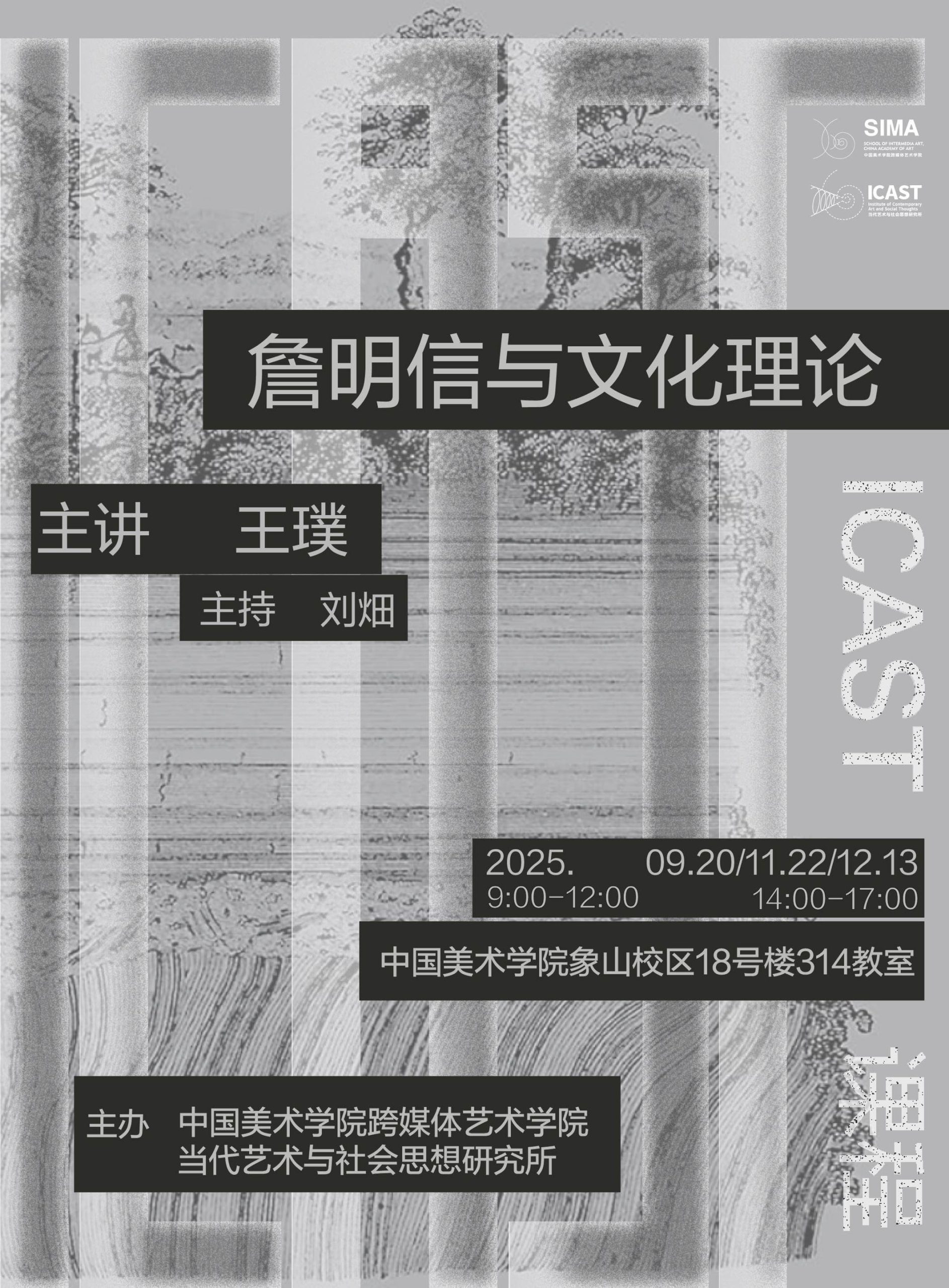
Presenter
Wang Pu (Brandeis University)
Moderator
Liu Tian (ICAST)
Introduction
In the autumn of 2024, Fredric Jameson passed away. His intellectual work ranged from Sophocles to science fiction, encompassing virtually the entire spectrum of cultural forms. His final publications, The Benjamin Files and The Years of Theory, may be read as the ultimate periodization of his own critical trajectory. Jameson stands as the most significant and erudite cultural Marxist produced by American postmodern society within the latest long cycle of global capitalism. His life’s work has come to constitute a final contemporary monument of critical theory.
This course undertakes an intensive reading of Jameson’s “dialectical sentences,” using them to rethink the cultural turn since the 1960s—a cultural logic within which we ourselves, and contemporary Chinese literature and art in particular, remain deeply embedded. If theory insists that we must “always historicize,” why does history so often appear only in formalized, mediated forms? In an era marked by the erosion of historical consciousness, how can periodization retain its inexhaustible urgency within contemporary cultural practice? How can political interpretation remain effective and retain its priority?
Theory now appears as something belonging to years past, irretrievable in the strict sense of historical dialectics—gone, and seemingly unable to return. Yet as globalization settles into a new normal defined by overlapping crises, have we entered a new historical conjuncture? Within this context, which is more dialectical: cultural subjectivity as “cognitive mapping,” or history itself, which resists re-presentation? This struggle—one that must ultimately be lost—may be the imperative Jameson bequeathed to us.
The course will be conducted through lectures, shared readings, and open discussion.
Lecture 1: Dialectical Sentences
Primary Reading: The Jameson Reader, Introduction.
Supplementary Reading: Sartre: The Origins of A Style; The Prison-House of Language; Jameson on Jameson: Conversations on Cultural Marxism; Marxism and Form.
Overview: From the study of Jean-Paul Sartre to Fredric Jameson’s final theoretical writings
Lecture 2: Form / Politics
Primary Reading: Marxism and Form; The overall project of The Poetics of Social Forms; The Political Unconscious.
Lecture 3: The Cultural Turn
Primary Reading: Postmodernism or the Cultural Logic of Late Capitalism; Postmodernism and Cultural Theory; The Cultural Turn.
Supplementary Reading: Perry Anderson, The Origins of Postmodernity.
Lecture 4: Cognitive Mapping
Primary Reading: Postmodernism or the Cultural Logic of Late Capitalism.
Lecture 5: Archaeologies of the Future
Primary Reading: The overall project of The Poetics of Social Forms; Archaeologies of the Future; Liu Cixin, The Three-Body Problem
Lecture 6: The Energy of Periodization
Primary Reading: The Political Unconscious continued; Postmodernism continued; “Periodizing the 60s;” “Third-World Literature;” Archaeologies of the Future; The Modernist Papers; Cultural Turn; A Singularity of Modernity; “Cultural Revolution” and other essays from Valences of the Dialectic; The Years of Theory.
Presenter
Wang Pu (Brandeis University)
Moderator
Liu Tian (ICAST)
Introduction
In the autumn of 2024, Fredric Jameson passed away. His intellectual work ranged from Sophocles to science fiction, encompassing virtually the entire spectrum of cultural forms. His final publications, The Benjamin Files and The Years of Theory, may be read as the ultimate periodization of his own critical trajectory. Jameson stands as the most significant and erudite cultural Marxist produced by American postmodern society within the latest long cycle of global capitalism. His life’s work has come to constitute a final contemporary monument of critical theory.
This course undertakes an intensive reading of Jameson’s “dialectical sentences,” using them to rethink the cultural turn since the 1960s—a cultural logic within which we ourselves, and contemporary Chinese literature and art in particular, remain deeply embedded. If theory insists that we must “always historicize,” why does history so often appear only in formalized, mediated forms? In an era marked by the erosion of historical consciousness, how can periodization retain its inexhaustible urgency within contemporary cultural practice? How can political interpretation remain effective and retain its priority?
Theory now appears as something belonging to years past, irretrievable in the strict sense of historical dialectics—gone, and seemingly unable to return. Yet as globalization settles into a new normal defined by overlapping crises, have we entered a new historical conjuncture? Within this context, which is more dialectical: cultural subjectivity as “cognitive mapping,” or history itself, which resists re-presentation? This struggle—one that must ultimately be lost—may be the imperative Jameson bequeathed to us.
The course will be conducted through lectures, shared readings, and open discussion.
Lecture 1: Dialectical Sentences
Primary Reading: The Jameson Reader, Introduction.
Supplementary Reading: Sartre: The Origins of A Style; The Prison-House of Language; Jameson on Jameson: Conversations on Cultural Marxism; Marxism and Form.
Overview: From the study of Jean-Paul Sartre to Fredric Jameson’s final theoretical writings
Lecture 2: Form / Politics
Primary Reading: Marxism and Form; The overall project of The Poetics of Social Forms; The Political Unconscious.
Lecture 3: The Cultural Turn
Primary Reading: Postmodernism or the Cultural Logic of Late Capitalism; Postmodernism and Cultural Theory; The Cultural Turn.
Supplementary Reading: Perry Anderson, The Origins of Postmodernity.
Lecture 4: Cognitive Mapping
Primary Reading: Postmodernism or the Cultural Logic of Late Capitalism.
Lecture 5: Archaeologies of the Future
Primary Reading: The overall project of The Poetics of Social Forms; Archaeologies of the Future; Liu Cixin, The Three-Body Problem
Lecture 6: The Energy of Periodization
Primary Reading: The Political Unconscious continued; Postmodernism continued; “Periodizing the 60s;” “Third-World Literature;” Archaeologies of the Future; The Modernist Papers; Cultural Turn; A Singularity of Modernity; “Cultural Revolution” and other essays from Valences of the Dialectic; The Years of Theory.